



 Accessoires IBC 1000 litres
 Couvertures Chauffantes
 Raccords Plomberie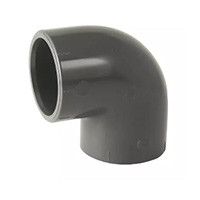
 Bidons / Futs et raccords
 Semences





 Produits Phyto


 Jardin




 Espaces Verts


 Barbecue - Braséro - Cheminée

 Entretien

 Fluides & Climatisation
 Arrosage
Connecting PVC to Metal: Anti-Leak Technical Guide
Repairing an old steel pipe, connecting a pool pump with stainless steel fittings or adapting a brass tank outlet to a modern network: mixed connections are a must for both renovation and new installations. But marrying metal and PVC-U is more than just screwing. Between opposing coefficients of expansion, the risk of mechanical breakage and sealing errors, this transition is strewn with pitfalls that can turn a simple modification into major water damage. At Multitanks, we help you master the art of the hybrid transition.
Why is hybrid connection so complex?
The main challenge lies in the nature of the materials involved. Metal (galvanized steel, stainless steel, brass) is an extremely rigid and stable material. Conversely, PVC-U (unplasticized polyvinyl chloride) is a polymer which, although rigid, retains a certain elasticity and reacts strongly to temperature variations.
When you screw a metal fitting into a plastic one, you create a stress point. If the network is subjected to water hammer (sudden pressure peaks) or major temperature changes, the metal will not move, but the plastic will "work". Without the proper technique, it's the plastic threads that will eventually give way, creating micro-cracks invisible to the naked eye that will become permanent leaks within a few weeks.
Pitfall n°1: Differential thermal expansion
This is the most common error in industrial and domestic plumbing. PVC-U expands approximately 7 to 10 times more than steel. Imagine a 10-meter PVC pipe: a simple temperature rise of 20°C can cause it to "stretch" by almost 1.5 cm. If this pipe is clamped at the ends by rigid metal fittings, the force exerted on the thread is colossal.
To avoid this pitfall, never make a metal/PVC transition in a straight line without leaving some clearance, or without using a fitting capable of absorbing the movement. The use of expansion hoses or changes of direction (elbows) allows the PVC to move without tearing the metal fitting. This is where bonding PVC fittings offer invaluable design flexibility to create networks that can "breathe".
Pitfall no. 2: Male/female screwing (Sense counts!)
There's a universal golden rule when it comes to mixed connections: always avoid screwing a metal male fitting into a plastic female fitting.
Why? Because metal is harder than plastic Because metal is harder than plastic. When screwed, the metal acts like a wedge, spreading the walls of the PVC female fitting apart. Under water pressure, the plastic fitting undergoes tensile stress (it wants to open). If you squeeze a little too hard, the PVC fitting can split instantly or, worse, become brittle and break in a few months. The ideal solution is to do the opposite: a PVC male fitting (flexible) that fits into a metal female fitting (rigid). The metal then "contains" the plastic, which is mechanically much safer.
Pitfall no. 3: Watertightness (goodbye to oakum!)
If you're used to traditional steel plumbing, you'll be familiar with oakum and joint compound. Forget them immediately for PVC. Wadding swells in contact with moisture, increasing the internal pressure on the plastic female fitting and eventually causing it to burst. What's more, some jointing compounds contain petroleum solvents that chemically attack PVC, making it brittle like glass.
For a successful transition, Teflon (PTFE) tape remains the safest solution. It ensures sliding during tightening and a perfect seal without chemical stress. For professional installations, plastic-specific anaerobic resins (metal-compatible) are also an excellent option. Find all our dedicated products in the Sealing category.
The technical solution: The 3-piece union
By mixing metal and plastic, you create a system that will one day have to be dismantled (pump change, scaled valve, etc.). If you've glued and screwed the whole thing together rigidly, you'll have to saw your system apart at the slightest intervention.
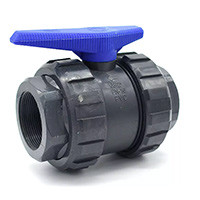
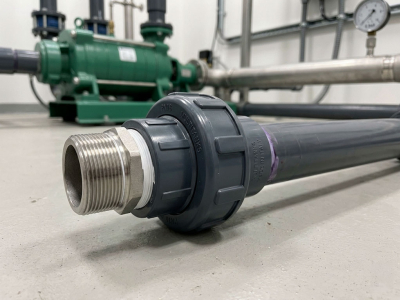
The 3-piece union (or "American" fitting) is your best ally. It allows you to disconnect the plastic part from the metal part without having to turn the whole pipe. It's the "intelligent" mechanical breaking point in your installation. Always use a union at every mixed transition: it absorbs some of the vibrations and makes future maintenance much easier, without stressing fragile threads.
Multitanks tip: When screwing a PVC fitting onto metal, tighten "by hand plus a quarter turn". Don't use a massive wrench with an extension. If you can't seal by hand, you haven't used enough Teflon or the thread is damaged. Forced tightening will only ensure that the plastic breaks.
Managing vibration and water hammer
A mixed network is particularly sensitive to shock waves. When a solenoid valve closes suddenly, the shock wave (water hammer) passes through the pipe. The metal doesn't absorb it, but transmits the energy. The mixed transition point then becomes the receptacle for all this mechanical violence.
To protect your PVC-U fittings, make sure your pumps are mounted on silent-blocks and, if possible, use a section of flexible hose (such as armored hose or flexible sleeve) between the metal pump outlet and the rigid PVC network. This "decouples" vibrations and dramatically extends the life of your plastic threads.
Conclusion
Connecting PVC-U to metal is not rocket science, but it does require a paradigm shift. You have to accept that plastic is the weak link in the chain, and design the installation to protect it. By respecting the direction of screwing (male plastic into female metal), banishing wire mesh in favor of Teflon, and anticipating thermal expansion, you'll obtain a hybrid network as reliable as a monolithic installation.
Take the time to choose the right components: a 316 stainless steel nipple coupled with a PN16 quality PVC-U union is an investment that will save you hours of emergency repairs. At Multitanks, we stock all the transition parts you need to make your renovation a lasting technical success.
See why the transition to metal is critical.
Share this content