



 Accessoires IBC 1000 litres
 Couvertures Chauffantes
 Raccords Plomberie
 Bidons / Futs et raccords
 Semences



 Produits Phyto

 Jardin

 Espaces Verts
 Barbecue - Braséro - Cheminée
 Entretien
 Fluides & Climatisation
 Arrosage
Fixing a Water Leak Without Glue: Emergency Solutions
Water never warns before it escapes. Whether it's a pipe punctured by a misguided spade, a PVC fitting cracking under pressure, or a joint giving way in a technical room, the urgency is the same: you have to act fast. However, bonding repairs, although standard, are often the enemy of urgency. It requires a perfectly dry surface and a curing time that can paralyze your installation for 24 hours. In this article, we'll explore genius solutions for repairing your leaks instantly, without glue, thanks to the compression and mechanical screw technologies offered by Multitanks.
The limits of gluing in critical situations
Why do we want to do without glue? The answer is simple: chemistry has its whims. For PVC-U glue to be effective, it must produce a "cold weld" between two surfaces. If the pipe is still sweating, if there's a drop of residual water, or if the temperature is too low, the bond will be compromised. What's more, once glued, the system is final. If the repair is slightly crooked, you have no recourse but to cut and start again.
By opting for a mechanical repair, you remove these constraints. You can work on a wet pipe, re-pressurize the system immediately after tightening, and even dismantle your repair later if you want to redo the installation cleanly. It's the difference between being "stuck" and being "saved".
Solution n°1: The compression sleeve (the fatal weapon)
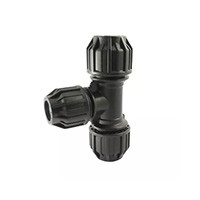
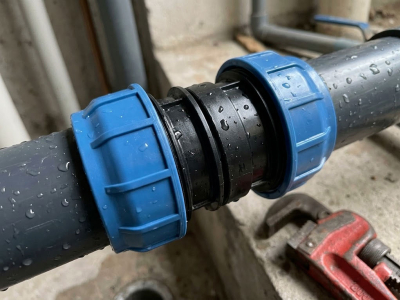
The real hero of emergency repairs is the PVC screw-in sleeve (also known as the compression fitting). It works like a charm: it uses an inner O-ring to press against the pipe wall as the nut is tightened.
If you have a cut PVC or PE pipe, all you have to do is cut the damaged section cleanly, slide on the sleeve and tighten. The seal is immediate and can withstand pressures of up to 16 bar (PN16). This is the preferred solution for professionals who want to repair buried pipes without having to dig a huge trench to handle rigid pipes.
Repairing a split fitting: Going all-in
A classic leak occurs when a glued fitting is subjected to excessive vibration or partial freezing. The plastic cracks at the joint. Rather than attempting to seal the crack with resin (which fails 9 times out of 10), the winning strategy is to remove the defective section and replace it with PVC-U screw-in fittings.
By using nipples, reducers or threaded plugs, you create a modular structure. The threads are then sealed with PTFE (Teflon) tape. This method allows you to recreate a solid junction where gluing is no longer possible due to lack of space or available pipe length.
Isolation: Installing an emergency valve
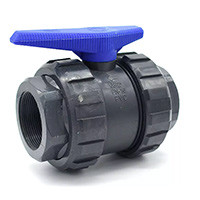
Sometimes, the leak is located in an area that cannot be repaired immediately. In this case, the best "repair" is isolation. By cutting the pipe upstream of the leak and installing a brass quarter-turn valve, you regain control. This allows you to continue using the rest of your network (for domestic water, for example) while isolating the faulty section from the garden or pool until the final part is installed.
Sprinkler leaks: speed is of the essence
For above-ground systems, leaks are less dramatic but just as annoying. A punctured garden hose wastes hundreds of liters per hour. Instead of using adhesive tape that will peel off in the first sunlight, use quick-release hose couplings. A simple repair coupling (double junction) allows you to cut the pierced part and connect the two pieces with a click. It's clean, definitive and costs just a few euros.
Expert's tip: For leaks on flexible hoses or pump joints, never forget the power of a good clamp. Our stainless steel clamps are indispensable. A wide clamp can sometimes stop a leak on a slightly loose sleeve by applying a uniform pressure that the hand could never achieve.
How to deal with an "impossible" leak?
Sometimes the leak is located on an elbow or a complex shaped part where no fitting will fit. That's where self-amalgamating tape comes in. This tape has no glue: it fuses to itself when stretched to create an ultra-strong, watertight rubber skin. Apply it under maximum tension to the punctured pipe. To reinforce this "doll", you can add a hose clamp over the repaired area to maintain compression.
Conclusion: Anticipate to avoid suffering
The difference between a disaster and a simple mishap lies in your toolbox. Having a few compression sleeves of the same diameter as your pipes (usually 32mm, 40mm or 50mm) and a handful of screw-on fittings is the best investment you can make in your peace of mind. By eliminating glue from your emergency repairs, you gain speed, efficiency and peace of mind. At Multitanks, we select PN16 parts capable of turning any DIYer into a hydraulic emergency expert.
Answer 2 questions to find the ideal emergency fitting.
1. What type of pipe is leaking?
Share this content