



 Accessoires IBC 1000 litres
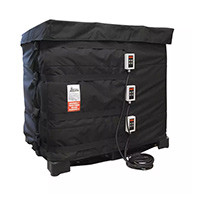
 Couvertures Chauffantes
 Raccords Plomberie
 Bidons / Futs et raccords
 Semences

 Produits Phyto

 Jardin

 Espaces Verts

 Barbecue - Braséro - Cheminée
 Entretien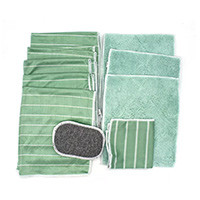
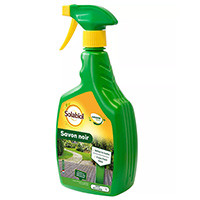
 Fluides & Climatisation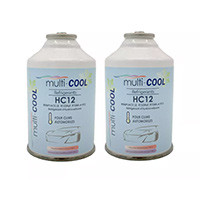
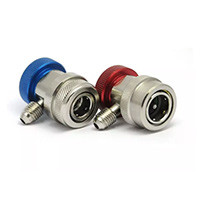
 Arrosage
• Rainwater collected and used in the house can be an alternative for all people who are building their house for whom regulations prohibit the discharge of water from the roofs to the sewer.
Rainwater is an inexhaustible natural resource. Once it falls on the roofs, we improperly dump it into the sewers, which is a huge waste. There are several ways to collect and use rainwater:
• The main idea on the subject is to collect rainwater to water your garden and wash your car. There are several solutions on the market to carry out this type of service, knowing that the water used is raw recovered and that it must be used on a different network from the public network. Unless you use a water filtration and treatment system that will allow you to use the existing public network. But the investment would not be profitable.
• The second idea is to use rainwater to fill and top up water for your pool. With the abundance and proliferation of private swimming pools, we are depleting drinking water resources. Rainwater is a good alternative, it can be filtered and treated to meet your requirements.
• The third idea is the use of rainwater throughout the home. Indeed, collecting rainwater from roofs is easy:
All you need is a detached house, a little land to add a recovery tank, a pump, a good treatment and filtration element to distribute rainwater throughout the house. Rainwater has so many benefits that it's important to use it throughout the house.
Financial benefits
Nowadays, water is becoming a scarce commodity. Its price is constantly increasing. It has doubled in the last 10 years and an increase in the price of water of around 5 to 10% per year is announced for future years. You have to be lucid and know that it is not the water itself that determines its price but its treatment and delivery to the tap.
The drinking water network in France is in a dilapidated state and does not always meet the requirements of European standards. This implies a programme to bring it up to standard spread over several years with a cost that will be borne by the consumer.
Water treatment is becoming more and more expensive. The quality of water, at its core, being increasingly mediocre, requires an increasingly expensive implementation to always obtain the same quality at the tap with a cost that will always be borne by consumers.
The better quality rainwater falls on our property free of charge and with inexpensive treatment, it can be used in a more noble way than we do today.
• Rainwater is soft, so less detergent is needed for all your household chores. The need for detergent is reduced by 40 to 60%. For a family of 4, the savings per year can be close to 200 to 250 euros.
• By its softness, rainwater protects your household appliances: more aggressiveness of limescale, more use of salt for the dishwasher, more calgon or anti-limescale product, cumulus clouds are protected, less electricity consumption to heat the water to temperature.
• The softness of rainwater is good for the skin. As city water is often calcareous and highly chlorinated, it attacks the skin. Rainwater eliminates several problems due to the aggressiveness of chlorinated water, such as scalp dandruff and allergic skin problems.
Ecological benefits
The use of rainwater has various ecological advantages. It makes it possible to preserve the use of groundwater, which is already at a critical level during the summer periods (several French departments are subject to water restrictions).
• When it is recovered in a cistern, it can be used as a buffer zone in the event of heavy rainfall with wastewater treatment plants, which have great difficulty managing this large influx of water. This influx can cause tap water that is unfit for consumption.
• Rainwater collected and used and then polluted in the house allows for easier recycling for wastewater treatment plants. Indeed, rainwater falls on public roads loaded with heavy pollutants that are even more difficult for wastewater treatment plants to treat.