Accessoires IBC 1000 litres
 Couvertures Chauffantes

 Raccords Plomberie
 Bidons / Futs et raccords

 Semences
 Produits Phyto

 Jardin

 Espaces Verts


 Barbecue - Braséro - Cheminée
 Entretien
 Fluides & Climatisation
 Arrosage

Japanese maple and Camellias: Why is Or Brun potting soil vital?
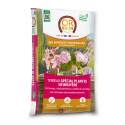
March 2026: nature awakens, but for some garden queens, it can be a rude awakening. Japanese maples, camellias, azaleas and hydrangeas have one thing in common: they're all acid-loving plants. In conventional soil or with water that's too calcareous, they suffocate, their foliage turns yellow (chlorosis) and their blossoms fade. For these exceptional plants, the growing medium is not a detail, it's their life insurance. Or Brun has been formulated to break this limestone cycle and ensure luxuriant growth, even in pots.
Japanese maple: the challenge of drainage and acidity
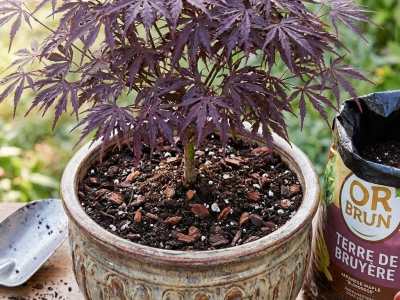
Acer palmatum (Japanese Maple) is undoubtedly the most graceful tree in a pot, but it's also the most demanding. It has a fine, superficial root system, and dislikes above all stagnant humidity associated with soil too rich in limestone. Inadequate pH levels block iron assimilation, causing delicate leaves to dry out prematurely in midsummer.
Thanks to its acid pH of 4.9 and its composition rich in bark and white peat, Or Brun potting soil guarantees the necessary acidity while providing an ultra-aerated structure. Sustainably managed white peat provides exceptional water retention (592 mL/L), preventing your maple tree from the water stress that causes its leaf tips to burn as soon as the June heat sets in.
The science behind blue hydrangeas
Why do your blue hydrangeas turn pink after a year? It's a question of soil chemistry. The blue color depends on the plant's ability to absorb aluminum from the soil, a reaction that is only possible in a very acidic environment.
With 55.4% organic matter and NPK 4-6-10 organic fertilizer, this potting soil acidifies the root ball on a long-term basis. By repotting your hydrangeas in March, you're setting the blue pigments for the coming season. The natural fertilizer incorporated (0.5 kg per m³) ensures explosive flowering without the risk of burning the sensitive roots of these undergrowth shrubs.
Potting: The golden rule of drainage
Even with the best potting soil in the world, an acidophilic plant will die if its roots are immersed in water. For repotting, the rule is simple: choose a pot approximately 3 times the volume of the current root ball. Before pouring in the potting soil Or Brun, create a 3 to 5 cm drainage layer at the bottom of the pot.
Use our Vilmorin clay balls for light, effective drainage. For older Japanese Maples or pots exposed to the wind, use pozzolan: this heavier volcanic rock stabilizes the pot and offers incredible porosity for fine roots.
Maintenance: Watering and micro-irrigation
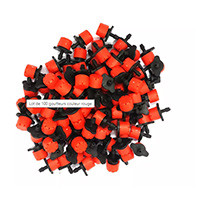
The final pitfall lies in watering. If you use tap water (often hard water), you will gradually neutralize the acidity of the soil Or Brun. The ideal solution is to collect rainwater. For seamless management, install a micro-irrigation system.
Thanks to precise drippers, you can maintain the constant humidity that azaleas love, without ever saturating the substrate. Use your hand tools to lightly scrape the surface of the soil once a month; this prevents the formation of a crust of mineral salts and allows the soil to continue to breathe.
Expert advice: When repotting, don't pack the potting soil Or Brun like a madman. These plants need oxygen. Simply press the potting soil with your fingertips along the edges of the pot, followed by a generous watering which will naturally place the soil against the roots.
Conclusion
Offering the right potting soil to a heather plant means respecting its wild nature. The Or Brun mix, with its perfect balance of forest soil, bark and organic fertilizer, transforms the constraints of the pot into a growth advantage. By controlling acidity and drainage, you can make your terrace a sanctuary for these exceptional plants. March is here: get ready to transplant!
Choose your exposure to find the ideal soil partner Or Brun.
Share this content